Visar inlägg med etikett Comedy. Visa alla inlägg

onsdag 17 februari 2016

TV-Month: The Sitcom

What kind of TV-shows did you watch growing up? Apart from children's programming, I, and many others, would have to answer that question with "sitcoms". Most commercial TV channels I had access to filled their afternoon schedule with reruns of American sitcoms and it became something of a weekday ritual to sit down and watch That '70s Show (1998-2006) and the like before dinner. I still enjoy the genre, even though I haven't added any new ones to my watch list in quite a while, and I today would like to discuss specific traits and tropes related to the sitcom format.

What is a sitcom?
Generally speaking, what distinguishes the sitcom, or "situation comedy", genre from other types of comedy is that the comedy is derived from character interactions in a specific setting, be it a home, a school or a workplace. However, for the purposes of this discussion I will use the term in a more narrow, television-specific sense, which I will call the theatre sitcom. I use this term because I think the typical sitcom format is very similar to theatre: few sets, limited camera movement (similar to how a stage play is viewed) and a studio audience. Don't misunderstand me. I actually prefer comedy shows that deviate from this format, such as the one-camera medical comedy Scrubs (2001-2010) or the mockumentary-style political comedy Parks and Recreation (2009-2015). I chose to narrow my focus to the theatre sitcom for a number of reasons: I couldn't possibly discuss all of television comedy in one post, this format has the most nostalgic value for me and, most importantly, this is what most people associate with the term "sitcom".

There is a good reason why this format has been and remains popular. It is perfect for television, as per the budgetary restrictions discussed in last week's post. Most or all scenes are shot in a studio, using a small number of sets. It uses a small ensemble cast and rarely introduces new characters for more than a few episodes. The episodes are short and scenes can be shot rapidly because of the small number of sets and locations.

Sitcoms are commonly thought of as family entertainment. This is partly because content restrictions favour family-friendly content, but also because of availability. The best way to ensure a steady viewership, which is what all TV-shows aim for, is to make the show appeal to as many demographics as possible. Many sitcoms feature a family, providing characters that both parents and children can identify with and allowing plots that all family members can relate to. Watching the latest episode of a particular sitcom can even be a family event!

Tropes
As with any genre, there are particular tropes associated with sitcoms. Below, I will focus on a few that I think are interesting from an analytical point-of-view.

Firstly, sitcoms, like most forms of comedy, uses plenty of stock characters. Stock characters are character stereotypes, e.g. the strict father, the clueless mother, the weird neighbour or the nerdy friend. Stock characters are used for a number of reasons. The audience can immediately recognise the stereotype and therefore already knows a lot about the character, without the need to spend precious airtime on character development. It is also possible to surprise the audience, who expects a certain character to act a certain way, by having a character occasionally act contrary to their stereotype. Finally, stock characters interact with each other in specific comedic ways, making the writing process easier and faster, which might be necessary to accommodate the production schedule. So, yes, you could call it lazy writing.

To exemplify the use of stock characters in sitcoms, I will refer you to That '70s Show. The show uses plenty of stereotypical characters, some related to the era in which it is set. Eric Forman (Topher Grace), arguably the main protagonist, is a nerdy Star Wars fan, his best friend Steven Hyde (Danny Masterson) is a counter-culture conspiracy criminal, and his love interest Donna Pinciotti (Laura Prepon) is a tomboy and, more prominently later in the series, second-wave feminist. Other teenaged main characters include the handsome but stupid Michael Kelso (Ashton Kutcher), the mean, shallow, upper-class brat Jackie Burkheart (Mila Kunis), and the foreign pervert Fez (Wilmer Valderama). Eric's parents, Red (Kurtwood Smith) and Kitty (Debra Jo Rupp), exemplify the strict father and the cheerful housewife mother respectively. In discussing stock characters, one must remember that the actual characters are show-specific variants of stereotypes and, as a show progresses, characters usually become more three-dimensional. However, stock characters are still useful as analytical tools, as they allow us to compare characters from different shows or films.

Secondly, as sitcoms are made to be accessible to anyone familiar with the premise of the particular show, they are often characterised by the status quo. While sitcoms may have season-long story arcs, they are often downplayed throughout most of the season and most episodes are quite formulaic and self-contained. A conflict is established, unfolds and is resolved by the end of the episode. Individual episodes rarely have a lasting effect on a show or its characters. Change, in the form of new characters and locations or changes in relationships between characters, is slow and carefully done to avoid upsetting the audience. If a change is perceived negatively, it can be undone using retroactive continuity.

In some sitcoms, however, change is inevitable. Child actors grow up and this can be used to explore other possibilities for the characters. Time is also a factor. In order for a show to be set in the current year, and deal with contemporary topics, some character evolution and aging is often necessary, unless the show employs a floating timeline - when the characters don't age and the show is always assumed to be set in the current year. This is more common in animated sitcoms, a distinct genre, such as The Simpsons (1989-) and Family Guy (1999-). That '70s Show uses a variation on this, as the eight seasons of the show takes place between 1976 and New Year's Eve 1979, with every season, for example, having its own Christmas episode.

The Big Bang Theory (2007-) is a good example of how change often works in sitcoms. The show is about Caltech scientists Leonard (Johnny Galecki), Sheldon (Jim Parsons), Howard (Simon Hellberg) and Raj (Kunal Nayyar) and how their lives change when they meet Leonard and Sheldon's new neighbour Penny (Kaley Cuoco). The early seasons deal mostly with Leonard's crush on Penny and their subsequent attempts at a relationship, before they finally get together and eventually marry. Along the way, new female main characters are introduced in Howard's girlfriend and later wife Bernadette (Melissa Rauch) and Sheldon's girlfriend Amy (Mayim Bialik). Over the course of the series, the five original main characters each change noticeably: the shy Leonard becomes more confident; the irresponsible Penny becomes more responsible and abandons her struggling acting career for a more secure profession; the social oblivious and anal retentive Sheldon grows up and becomes more considerate and socially open; the childish and perverted Howard matures; and Raj, who in the early seasons was unable to speak to women when sober, gets over most of his insecurities. However, the characters are still recognisable as their counterparts from the first few seasons.

Thirdly, another common trope in sitcoms, as well as television in general, is the "will-they-won't-they" couple. There are usually two main characters who throughout the series pursue each other romantically without ever establishing a stable relationship for more than a season at a time. They do however often end up together at the end of the series. One reason this trope has become so conventional is because it allows for a number of plots and conflicts: pursuing one another, getting together, breaking up and dealing with the consequences.

How I Met Your Mother (2005-2014) is a sitcom that, in a way, attempts to subvert the trope. The show is framed as "Future Ted" (Bob Saget) telling his children in 2030 how he met their mother. In the first episode, we are told that main character Ted's (Josh Radnor) new love interest Robin (Cobie Smulders) is not the titular mother. Over the course of the show, we see Ted pursuing Robin, the two of them dating and breaking up, and both characters meeting other people - in Robin's case, other main character Barney (Neil Patrick Harris). In a controversial twist ending, Ted and Robin get together at the end of the series finale, set in 2030. Even if we ignore the ending, the show still fails to subvert the trope. Ted and Robin's relationship is the focus of the series and a problem in many of their romantic relationships with other people.

Values and ideology
I would like to finish this discussion with a reflection on what sitcoms, consciously or not, teach us about life. There are values and ideologies to be uncovered in any genre or work of fiction and I will now attempt an ideological analysis on the sitcom as a genre.

Most sitcoms emphasize what I like to call "extended family values". Sitcoms deal with conflict between family and friends and these conflicts are often resolved by the characters realising that family/friendship is more important than whatever the conflict may be about. The main characters learn to see beyond each other's differences and bad sides and focus on what really matters. They have to put up with each other, because defection is never ethically acceptable.

Another common theme is "true love and destiny". Related to the "will-they-won't-they" trope, love usually conquers all. The unstable couple cannot give up on each other because they are soul mates. They are expected to keep trying until it works, regardless of how hopeless it seems. Because all's fair in love and war, attempts to hinder the other person from pursuing other romantic relationships are not only morally defensible, but also imperative. When s/he finally realises that the two of you are meant to be, all will be forgiven. In the real world, this kind of romantic behaviour is usually referred to as harassment or stalking. Another important aspect of sitcom love is that it is almost always heterosexual. Homosexual characters may occasionally be featured, but are rarely written as main characters. They may be used as comic relief (e.g. as silly, sassy or for the purpose of a "gay panic" joke), as a way for the show to comment on LGBT issues or for the sake of diversity. Nowadays, gay characters are more common than before, but I cannot recall a single gay character ever being featured on The Big Bang Theory, arguably the most popular sitcom right now.

Many sitcoms try to be socially progressive, but often find it to difficult because of the status quo. Let me explain what I mean. All In The Family (1971-1979) is famous for its dealing with social and political issues, through the conservative main character Archie (Carroll O'Connor) and his liberal daughter Gloria (Sally Struthers) and son-in-law Michael (Rob Reiner). The show dealt with controversial issues like racism, feminism, homophobia and the Vietnam War, and episodes usually ended with Archie being proven wrong. While the show was progressive in that it did not shy away from taking a stand on social issues, the problem is that Archie never learns or changes and most issues are only episode-specific. Because of the sitcom format, it is not even possible. If episodes dealing with important issues can't have any impact on the show as a whole, how much can the show be said to care about those issues? In the defense of the show, it was actually quite ground-breaking for a sitcom in the 1970s to actually adress controversial topics.

Conclusion
For some reason, I, and many others, are still drawn to the sitcom genre, even though it is predictable, formulaic and ideologically suspect. The process of writing this analysis has been strange - why would you overthink something so thoughtless? Well, to be honest, because critical thinking is important and, often, self-reflecting. I realise now why I, and so many others, love sitcoms. They are unchallenging. They are safe. And that is why it is important to analyse them. What makes us feel safe says just as much about us as what feels threatening, maybe even more.

And some of them are quite entertaining.

onsdag 27 maj 2015

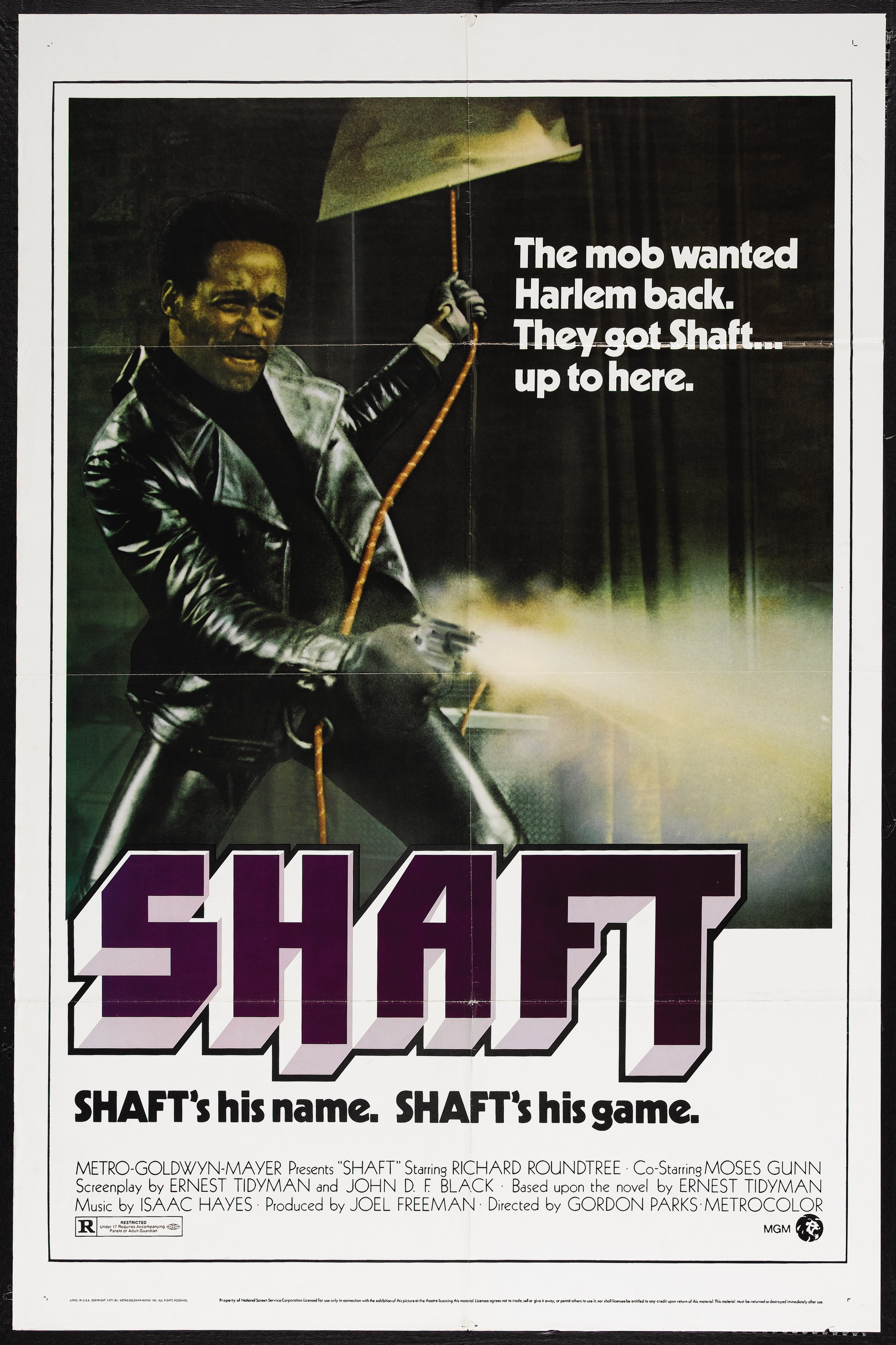
Shaft (1971) and Shaft (2000): A Comparison

While I usually deal with horror films, today I will discuss something more terrifying: racism. Or, at least, two films with African American leads that deal with race. Admittedly, there are plenty of classic films about racism, such as To Kill A Mockingbird (Robert Mulligan, 1962), I could have chosen, but the two films I will discuss today are, to be honest, more entertaining and tie in to an interesting subgenre of exploitation: blaxploitation.

Blaxploitation refers to a subgenre that emerged in the 1970s , catering to a black urban audience and featuring mostly black actors, often in stereotypical roles, soul music and themes relevant to African Americans. I must admit that I am not particularly well-versed in the subgenre; other than today's films, I have only seen Jackie Brown (Quentin Tarantino, 1997), which is a spoof/tribute to blaxploitation.


Shaft (Gordon Parks, 1971) is a film about private detective John Shaft (Richard Roundtree), who is hired by black gangster Bumpy Jonas (Moses Gunn) to locate his kidnapped daughter. He later learns that the kidnapping is part of a larger conflict between black gangsters and the Italian mafia. Central to the story is Shaft's reluctance to work with the police who are aware that something is going on, as he and other blacks do not trust law enforcement.


Shaft (John Singleton, 2000) is not a remake of the 1971 film, but a sequel (there were two other sequels in 1972 and 1973 that I have not yet watched). John Shaft II (Samuel L. Jackson) is the original Shaft's nephew and a detective with the NYPD. He is working on a hate crime case, where rich playboy Walter Wade Jr (Christian Bale) is accused of killing Trey Howard (Mekhi Phifer), a young black man who embarrassed him at a nightclub after making racist jokes. The New York City black community is outraged after Wade, because of his father's connections, manages to get bail and escape the country before trial. Shaft arrests him two years later when he returns, but he is once again released on bail. This causes Shaft to angrily quit his job and he attempts to find a missing witness. Wade also wants to find the witness and hires Dominican gangster Peoples Hernandez (Jeffrey Wright) to locate and kill her. Richard Roundtree returns as John Shaft I and tries to persuade his nephew to work with him.


If you are interested, here are the trailers:


There are some things that one needs to take into account when comparing the two films. The 1971 film is blaxploitation, while the 2000 film is not. The latter does not feature the classic subgenre stereotypes (other than the black stereotype that Jackson somehow always seems to be playing). It is also worth noting that the 2000 film features significantly fewer black actors than the 1971 film. Finally, the difference in budget alone ($ 500,000 and $ 46 million) could force one to conclude that they cannot be fairly compared to one another, at least with reference to quality. Therefore, I will focus on story, characters and themes - aspects of a film that should not be too dependent on budget.

There are some other genre differences between the films. The 1971 film is a thriller, while the 2000 film is more action-oriented. Roundtree's Shaft is a lot less serious and more joking than Jackson's and his character is also heavily played up as a ladies' man. Jackson's humor comes more from what he does than what he says, even though he gets some funny lines. In one scene, in order to get Hernandez' attention, he throws a basketball at him through an open window. I guess you could say that Jackson is playing a typical Samuel L. Jackson character. That being said, I think it's a good thing that the two Shafts are very distinct characters and not just the same character at different ages.

In the 1971 film, issues of race are mostly visible in the idea that blacks cannot trust whites and a large emphasis on the black community. Bumpy Jonas knows that the police would be more interested in his illegal activities than his missing daughter and therefore has to approach Shaft, a man he respects but does not like very much. One reason Shaft, and other blacks, are willing to help him is because his daughter is black. Racial tensions are also shown through language and attitudes between Shaft and white characters.

In the 2000 film, race is mainly a factor in Wade's hate crime. Wade is a rich, white, young man who reacts so strongly to a black man in his favorite night club that he taunts Howard and later lethally assaults him after Howard non-violently, and comically (he cuts two holes in a white napkin and places it on Wade's head as to look like a KKK hood), stands up for himself. During every scene at the courthouse, a large group of blacks are seen angered by the crime and how Wade seems to be able to buy his way out of responsibility.

In my book, one of the most important things about an action or thriller film is the antagonist. The hero, or antihero, needs a worthy villain to really show the audience what he/she can do. This is unfortunately an area where the 1971 film is lacking. The Italian mafia is represented only by a few mobsters, none of whom we get to know that much about. The entire film is shown through Shaft's perspective and he does not actually learn too much about the mafia. On the other hand, the 2000 film gives us two well-defined antagonists. Wade is given a lot of screen time without Shaft and the antagonism between Hernandez and Shaft is set up really well. We also, for example, learn that Hernandez wishes to be like Wade: rich, famous and able to go to whichever club he wants. The villains, along with the hate crime narrative, is why I personally prefer the 2000 film before the 1971 film. Needless to say, they are both good films that you should check out if you haven't already.

Concluding this review, I would like to end with the awesome theme song from the 1971 film, less awesomely titled "Theme from Shaft", written and recorded by Isaac Hayes. It won numerous awards, including the Academy Award for Best Original Song. The lyrics might be a bit cheesy, but it fits the film perfectly.


onsdag 24 december 2014

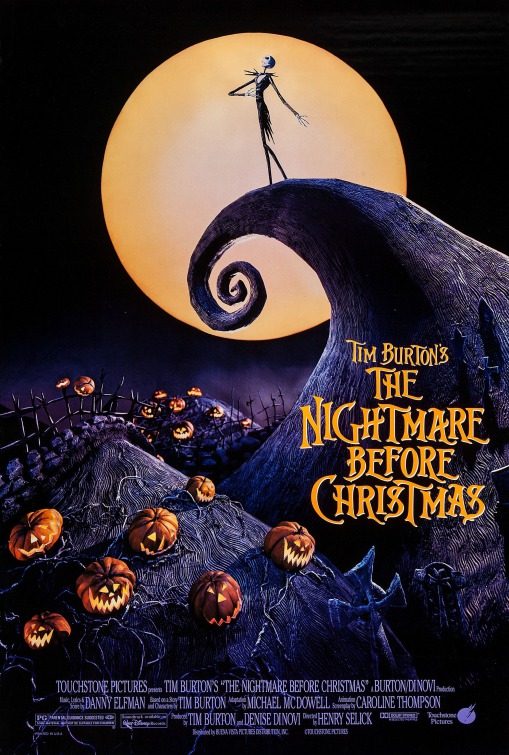
The Nightmare Before Christmas (1993) and Cultural Studies

It has been a long time since my last review, but I haven't had the time. However, I thought I should at least do one Christmas-themed review in December and which film would be better to review than my all-time favorite Christmas movie?


The Nightmare Before Christmas (Henry Selick, 1993) is a stop-motion animated musical. Based on an idea by Tim Burton, whose name appeared so often in the marketing people still think he directed it, the film combines elements from both Halloween and Christmas, resulting in a child-friendly and slightly morbid look at the holiday season. In this review, I will argue that the film highlights one of the main problems of cultural studies: whether or not it is possible to describe or replicate another culture within the language of one's own.


The film is set in a world where every holiday has its own world and we begin in Halloween Town, where Jack Skellington (voiced by Chris Sarandon, singing voice by composer Danny Elfman), "The Pumpkin King", has grown tired of doing the same thing every year. He leaves town during the celebrations and accidentally ends up in Christmas Town. He is fascinated by this strange new holiday and returns to Halloween Town, trying to explain Christmas to the other residents. While they are unable to grasp the concept, Jack still wants to celebrate Christmas this year and so the entire town gets to work. And, of course, there is a love interest and a villain and Santa Claus (in Halloween Town called "Sandy Claws") gets kidnapped.

I will not discuss the plot further, but I will briefly discuss the love interest Sally (voiced by Catherine O'Hara). Sally is a Frankenstein's monster-like doll, who frequently drugs her creator because she is restless and curious and wants to see the world outside the lab. She is the one who pursues Jack, who barely notices her because of his obsession with Christmas, but not in an aggressive or comedic way. It is clear that she is concerned about him and she seems to be the only sane and clever person in Halloween Town. She is an interesting character, but her and Jack's romance does seem a bit forced. They could have made her his sister without having to change too much.

Back to the original topic: what does the film say about cultural studies? Firstly, when Jack attempts to explain Christmas to the other residents of Halloween Town, they simply do not get the point. They are stuck within their own language and culture, which results in them asking confused questions like whether there still is a foot inside a Christmas stocking. When they try to make their own Christmas presents, to be given to people who celebrate Christmas, they make gifts like a murderous doll or a severed head, things they would consider proper gifts. Their actual language is also different from the language of Christmas Town and the real world. They describe a very successful Halloween celebration as "our most horrible yet" and, because of this usage, they do not understand that their version of Christmas has failed when it is referred to as "horrible".

Secondly, while Jack is obviously more knowledgeable about Christmas, he still does not understand. He attempts to understand the wonderful new holiday he encountered by reading books, for example A Christmas Carol, and by performing scientific experiments on toys and Christmas decorations (he even dissects on a teddy bear). Finally, he decides to stop trying to figure out Christmas and simply make his own.

There are two ways of viewing this "horrible" version of Christmas. One could say that it should not be called Christmas, because of their cultural ignorance and how the people who normally celebrate Christmas react to it. It could even be compared with the Satanic "Black Mass", a perversion of the Catholic Mass. However, one could also argue that they are simply doing their own thing and are actually enjoying it themselves. They are not trying to ruin Christmas; they just wants to be apart of it. Their fault is not malice, but ambition and thoughtlessness. In a way, the film does not give a definitive answer to the question about culture and language, but it does not have to. In the humanities, we rarely want those anyway. It is more meaningful to present different possibilities to highlight a question, rather than to provide a simple answer.

I love this film. The story is interesting, the characters are great, the animation is amazing and the music is spectacular. All songs are written by Danny Elfman, mostly known for his work on Tim Burton films like Batman (1989) and for the theme song from The Simpsons (1989-). On the whole, the film is very memorable and has some great re-watch value. Personally, I watch it every Christmas!


torsdag 6 november 2014

Robin's Favorites: American Psycho (2000)

This review will be more analytical than my review of Ed Wood (Tim Burton, 1994). Therefore, I will have to discuss the plot in greater detail. Naturally, this means that if you haven't yet seen the film, I suggest you watch it before reading any further. Much of what I am about to discuss have already been discussed by others, but I hope I have something new to contribute.


American Psycho (Mary Harron, 2000) is a thriller with a large chunk of black comedy. The film is set in the 80s and is narrated by protagonist Patrick Bateman (Christian Bale), a Wall Street VP who moonlights as a serial killer. It is based on the eponymous novel by Bret Easton Ellis. Unfortunately I haven't yet read the novel, but I think the film can be meaningfully analyzed independently.


The film follows Bateman's life before, during and after he murders Paul Allen (Jared Leto), another Wall Street guy. He is engaged to Evelyn (Reese Witherspoon), a socialite who mostly cares about being socially correct and wants to marry Bateman for that reason. Bateman doesn't care about Evelyn and is having an affair with the drug-addicted Courtney (Samantha Mathis), who is engaged to his closeted homosexual colleague Luis (Matt Ross). Bateman is jealous of Allen's job and social status and kills him. As he tries to cover up the murder, Detective Donald Kimball (Willem Dafoe) starts investigating Allen's alleged disappearance. He has a nice assistant, Jean (Cloe Sevigny), who suspects that there is something strange about him. Throughout the film, Bateman murders numerous women and hires a prostitute (Cara Seymour), who he names "Christie".

All of the actors and actresses give splendid performances, but no one comes close to Bale. If they had chosen a lesser actor to portray Bateman, the film would have been a disaster. Bateman is the narrator and the focus of every single scene. Therefore, I think it would be impossible for me not to select his character as the focus of my analysis.

The film almost explicitly states that Bateman lacks identity. In one of the opening scenes, he says that while "there is an idea of a Patrick Bateman", he is "simply not there". This view is further supported by the fact that he does not mind being mistaken for someone else and that he often makes up names for the prostitutes he hires. He does not consider it important. When Bale portrays Bateman in social situations, he makes it clear that Bateman is acting and that every word he utters is insincere. He is simply trying to fit in by pretending to be like everyone else. His obsessive talk about popular music before acts of violence, could also be interpreted as trying to fit in.

While I accept this interpretation, I would also argue that there is a real Patrick Bateman, beyond the feelings of jealosy and greed that he admits experiencing. In the trailer above, Bateman attempts to partake in the very misogynistic conversation they are having about women. He tells an anecdote about a serial killer's views on women and finds it hilarious. He is, however, the only one. This is the real him. He is fascinated by murder and mayhem and this idea will be more intelligible later, in my discussion of the ending. Bale's performance clearly informs the audience when Bateman is acting and when he is sincere, and if there was no Bateman, this distinction should not be so easily identified.

One of Bateman's main character traits is his focus on appearances. In the beginning of the film, we are treated to most of his morning routine and a detailed narration of every single step. We also see him working out and tanning, all to keep himself fit and handsome. He is an expert on fashion and even uses a Jean Paul Gaultier bag when disposing of a body. He is also very much bothered by other people's fashion faux pas and is not above correcting them. This shallowness goes even further, for example in this famous scene where Bateman and his colleagues compare business cards:


It is important to note that all of their cards are very similar, white with black text, and that it seems unneccessary to put too much emphasis on their trivial differences. Bateman is distraught that Paul Allen has a nicer business card than he and along with the fact that Allen can get a reservation at Dorsia, this results in him killing Allen. Paul Allen can be viewed as Bateman's perfect self; he has a better job, better connections and, as is revealed after the murder, a nicer and more expensive apartment. He is arrogant and shallow, but more successful than Bateman. After murdering Allen, Bateman even pretends to be him when hiring prostitutes. Admiration turns to jealosy, turns to anger and finally violence. As Bateman axes Allen in the head, he screams "Try getting a reservation at Dorsia now you fucking stupid bastard!" Dorsia is the most popular restaurant in Manhattan and only the most well-connected people can get a reservation. Bateman cannot. Dorsia represents what Bateman lacks and he often tries, unsuccessfully, to get a reservation. He twice fakes getting a reservation; he first tricks a drugged Courtney that they are at Dorsia and later tells Jean that they are going to Dorsia for dinner, when he in fact plans to murder her at his apartment.

Bateman's sexuality is also debatable. While he has sex with multiple women in the film, he seems to take more pleasure from hurting them rather than from the sex. In one scene, when he has a threeway with two prostitutes, he even checks himself out in the mirror, flexing his muscles. Afterwards, he hurts them with a coat-hanger. Bateman could be viewed as a latent homosexual, which would explain his promiscuity as overcompensating, and his fear of his sexuality would explain his hatred of Luis, who even comes on to him. For more on this, see Rantasmo's review.

While Bateman mostly prefers to be alone, he does have one person that almost could be considered a friend: Timothy Bryce (Justin Theroux). Bryce is very similar to Bateman, but he is not considered a threat. Early in film, Bateman describes Bryce as "the most interesting person [he] know[s]" and the two of them are shown doing cocaine together in club bathroom, where Bryce confides in Bateman about the side-effects of his steroid use. In the business card scene, Bateman is bothered by the fact that Bryce prefers Allen's business card to his. This implies that he cares about Bryce's opinion and the fact that he never considers murdering Bryce, even though he knows that he is having an affair with Evelyn, shows that their relationship is different from his relationships to other colleagues.

Bateman also has a special relationship with his assistant Jean. Bateman invites her to his apartment planning to kill her, but after a message from Evelyn on his answering machine, revealing to Jean that he is still engaged, he changes his mind and tells her to leave or else she might get hurt. Jean thinks he is referring to emotional pain and leaves. My interpretation as to why he spared her revolves around their conversation before Evelyn's message. She is genuinely nice to him, which no other character seems to be, and tells him about her plans and dreams, which he insincerely asked about. Bateman sees his other victims as shallow, horrible people, much like he views himself, and when he notices that Jean is different, he no longer wants to kill her. Instead, he sends her away because he is afraid that his urges might force him to. She is also the first person he calls when he suffers a breakdown.

SPOILER ALERT: The following four paragraphs discuss the ending of the film.

In a twist ending, it is revealed that Paul Allen is alive and well. Bateman is given this information by his lawyer, who refers to him as Davis. Before this, Bateman went to dispose of Allen's corpse, but found that Allen's remains are nowhere to be found. He is confused and frustrated that his lawyer doesn't believe his confession, and concludes that while he has escaped righteous punishment for his crimes, he does not feel better and will continue to inflict his pain on others.

While Bateman still believes that he did all of the horrible things the film has shown us, we, on the other hand, are forced to conclude that Bateman is insane. This, while a bit unexpected, is not too hard to accept, since we have have seen him taking medication in moments of stress. Insanity would also explain some of the film's more unrealistic  scenes, such as him blowing up a police car by shooting it (which even surprised himself) and killing Christy in a stairwell by dropping a chainsaw on her from several floors up. In the end, Jean also finds disturbing drawings in his calendar, revealing his morbid fantasies.

The fact that he never killed Paul Allen has huge consequences for the rest of the film. Every scene in Allen's apartment or referencing his disappearance must be figments of his imagination. Whether or not he actually committed other murders is uncertain. This also implies that Detective Kimball never existed, since there was in fact nothing for him to investigate. This makes sense, considering that Kimball in one scene shows Bateman a Huey Lewis and the News CD, which Bateman had played during the murder. Kimball could be interpreted as Bateman's fear of being discovered for what he is (whatever that may be).

Through this, we may interpret Bateman's obsessive need to fit in and be normal not as a way of covering for his murders or latent homosexuality, but for his mental illness. He must focus his attention on his appearance, since he cannot deal with what lies beneath. Maybe he created his psychopath persona as an excuse for him to pretend that there is nothing inside him worth thinking about, that he simply isn't there.

There are many reasons why this is one of my favorites. For one thing, it is extremely memorable. There are three scenes where Bateman plays and talks about music and these will stick with you like Alex (Malcolm McDowell) singing "Singing in the Rain" before raping a woman in A Clockwork Orange (Stanley Kubrick, 1971). Whenever I hear "Hip to be Square", "Sussudio" or "The Greatest Love of All", I think of Paul Allen's murder, Bateman in a threeway and lesbian foreplay respectively.

The film has remained controversial for a number of reasons. One of the more profound accusations have been misogyny. I will not deny that there is a lot of violence against women in the film and that nearly every female character is weak or timid. This film was definitely not made with a female audience in mind (excluding Bale's handsomeness and many nude or partially nude scenes). In its defense, the misogynist Bateman is not meant to be sympathized with. No one is supposed to view him as any kind of role model. That being said, I would not go so far as to suggest that the film uses misogyny as a way to critique misogynistic societal norms or conventions. Personally, I think some scenes go too far, but I can forgive them in the context of the rest of the film.

My main reason for loving this film can be seen on this page. There is just so much to think and talk about (and I haven't even mentioned the most common interpretation: as a critique of the shallowness of the 1980s) and as you should have realized by now, that is what I love to do.

lördag 1 november 2014

Robin's Favorites: Ed Wood (1994)

While the obvious way to discuss my favorite films would be in the form of a Top 10 or something similar, leading up to my all-time favorite, I decided to start with my number one. This is the only one I will rank. It would be impossible for me to assign ranks to my other favorites and be satisfied with the list, but there is no doubt that this one would be at the top. I have seen this film countless times and I will never grow tired of it. If you have met me at least twice, I have probably recommended it to you.


Ed Wood (Tim Burton, 1994) is semi-biographical film about infamous B-movie director Edward D. Wood Jr. (played by Johnny Depp), exploring his life and relationships during the time he made his three most-known films: Glen or Glenda (1953), Bride of the Monster (1955) and Plan 9 from Outer Space (1959). I won't go into too much detail plot-wise, as I would rather discuss why this film means so much to me. Some kind of summary is however necessary to help you understand the points I bring up. For more context, you may want to check out the trailer:


Ed Wood is passionate director-writer-producer with a complete lack of self-awareness. As he attempts to get a job directing a sex change-flick, he runs into one of his idols: horror movie icon Bela Lugosi (played brilliantly by Martin Landau). Lugosi is down on his luck, but Ed uses his fame to get the job, promising the producer that a star like Lugosi will bring in a lot of money at the box office. The resulting film, Glen or Glenda, is terrible, but Ed, along with Lugosi and his other friends, keep trying to make more movies.

Johnny Depp is brilliant as the over-enthusiastic Ed. One minute you're laughing at him, the next you feel deep sympathy for all his problems. This is, in my opinion, Depp's best performance. Ed is as quirky as Jack Sparrow or the Mad Hatter, but he feels real. Depp also looks good in drag. Oh, that's right, I forgot to mention that Ed Wood was a transvestite. The film deals with his cross-dressing humorously, as well as seriously. The viewer gets to experience the drama of him coming out to his girlfriend Dolores (played by Sarah Jessica Parker) and hear him explain how this is who he is. He never pretends to be a woman, he just likes to wear bras, panties and angora sweaters. I do however find it a bit annoying how often he explains that cross-dressing does not make him gay or less of a man, but, to be fair, this is always in response to other people's asking about it.

While Depp delivers a great performance, Martin Landau steal the show as Bela Lugosi. His portrayal of Bela incorporates a wide range of emotions: from optimistic to cynical, depressed and angry. He actually won the Academy Award for Best Supporting Actor (and makeup artist Rick Baker won for Best Makeup). While the film exaggerates certain aspects of Lugosi's personality (e.g. his cursing), Landau definitely looks the part:


 As a fan of Dracula (Tod Browning, 1931) and Lugosi in general, I find nothing objectionable about Landau's performance. While it isn't perfect, it doesn't have to be. In the end, it is respectful and as long as you don't mind minor historical inaccuracies, you'll probably love it. In fact, sometimes I wonder if Landau's acting as Lugosi as an actor is better than Lugosi's real performances in the films in question.

Other memorable supporting characters include Bill Murray as Bunny, Ed's transgender best friend; Jeffrey Jones as the TV psychic Criswell; and Lisa Marie as TV horror host Vampira.

Now, let's get more personal: why do I love this film so much? Well, I, like any person who think of themselves as creative, can identify with Ed. I have always loved to make up stories and write short stories, scripts, poems and song lyrics, and the film has a dual message for people like me. Firstly, while you might think of your work as brilliant, others may disagree. And they may have a point. We see Ed constantly fail as a writer, director and producer and we understand why. He is not very good at writing, directing or producing. When looking at our own work, we must be humble and self-critical, or we may never make something good.

The second message might seem contradictory to the first, but it is equally important; never give up on your dreams. We have to use our creative passion. In light of the first message, this means that while we may experience problems and criticism, we have to pull through if our projects really matter to us. The real story of Ed Wood ends with pulp novels, nudie films and alcoholism, but Ed Wood ends on a high note. Ed wanted to be a world-famous filmmaker; now he is.

A lot of these points have been brought up by e.g. James Rolfe and Doug Walker, both of whom also list Ed Wood as one of their favorite films. It is understandable that they, as independent filmmakers, love this film, as they probably can relate to a lot of the difficulties that arise when producing a film on a low budget.

For me, watching this film always puts me in a good mood. It isn't just because it is incredibly funny; it also leaves you with a sense of optimism. You feel as though everything is going to work out. It also helps you appreciate other films, especially Ed Wood's actual work, a lot more. While it may not paint an accurate picture of 21st century Hollywood, you can still apply its lessons to any film. Ed's arguing with producers and struggling for funding, probably goes on behind the scenes of a lot of films today.

I also love the film for what it represents. It was produced by Disney, but released under their Touchstone banner, for $18 million. Anyone with half a brain would've known that it would never make that money back. While Tim Burton and Johnny Depp certainly were popular at the time, they couldn't convince people to see a black-and-white (Burton had to fight hard for that) film about a cult filmmaker that most people had never heard of. Was the studio willing to pay that much to get a chance at a few Oscars? Maybe, but I prefer to think that they also fell for Ed and wanted to pay tribute to Hollywood's B-side.